
Local Council Unveils New Pothole Naming Ceremony
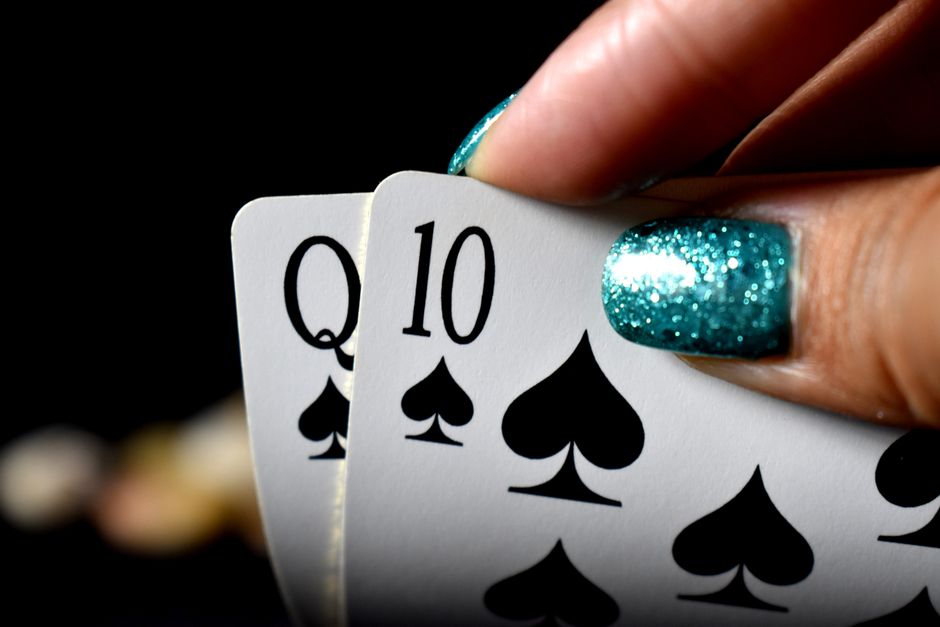
Let’s be honest: the iGaming landscape changes faster than a dealer shuffles a deck. What worked five years ago—or even last season—might now be a fast track to an empty bankroll. Whether you’re spinning slots, grinding poker tables, or betting on the weekend fixtures, the fundamentals of winning haven’t changed. But the tools, psychology, and traps have. This isn’t another fluffy “play responsibly” lecture. It’s a field guide to navigating the modern casino and betting world without getting played.
Slots: Variance Is Not Your Enemy—Ignorance Is
Every slot player eventually hears the term “RTP” (Return to Player). A game with 96% RTP returns, on average, $96 for every $100 wagered over millions of spins. But here’s what the marketing glosses over: that 4% house edge is not a gentle tax. It’s a grinder that works every spin. High-volatility slots like Bonanza or Money Train 3 can go 300 spins without a single payout above your bet, then explode with a 5,000x win. Low-volatility games like Starburst pay smaller but more often. Neither is “better”—they suit different bankrolls and temperaments.
What actually moves the needle? Three concrete habits:
- Check the max win and hit frequency before you spin. Many slots advertise “10,000x” but the probability of that hit is lower than being struck by lightning twice. The real question: what’s the typical bonus round payout?
- Set a loss limit per session and stick to it. If you deposit $200, decide now that $120 is your floor. Walk away when you hit it. No “one more bonus.”
- Use free demo modes to learn a slot’s rhythm. They won’t pay real money, but they reveal how often the bonus triggers—and whether the base game is fun or a slog.
One more thing: auto-spin is a sedative. It numbs you to losses. Tap manually. Feel every spin.
Sports Betting: The Closing Line Is Your Only Friend
If you bet on football, basketball, or MMA, you’ve seen “lock of the century” tweets. Ignore them. The only consistent signal in sports betting is the closing line—the final odds before an event starts. If you consistently beat the closing line, you’re a sharp. If you don’t, you’re paying vig for entertainment. That’s fine, but call it what it is.
Profitable bettors focus on line shopping. The same NFL spread can vary by half a point across three sportsbooks. Over 100 bets, that half-point is the difference between a 52% win rate (break-even) and 55% (profitable). Use odds comparison tools. Also, track your bets in a simple spreadsheet: date, event, odds taken, stake, result. After 50 bets, you’ll see patterns—like whether you lose more on parlays or live bets. Those comparing choices often turn to สล็อต.
And avoid the classic trap: chasing steam. When you see odds drop from +150 to +110, that’s public money flooding in. The value is usually on the other side. Wait for the line to settle, then decide.
Poker: Stop Playing the Cards, Start Playing the Players
Poker is the only iGaming vertical where you can have a mathematical edge over other humans, not the house. But most players never get there because they memorize hand charts and ignore everything else. Here’s the truth: at low-stakes tables ($1/$2 or $0.25/$0.50), your opponents are not GTO wizards. They call too much, bluff too little, and telegraph strength with bet sizing.
Three adjustments that pay immediately:
- Value bet thinner. If you have top pair with a weak kicker and your opponent checks the river, bet 40–50% of the pot. They’ll call with worse. Most low-stakes players hate folding.
- Bluff less on multi-way pots. Bluffing one opponent works 40–50% of the time. Bluffing three opponents works almost never. Save your bluffs for heads-up situations.
- Watch for timing tells online. A snap-check usually means a draw or weak hand. A long tank then call often means a monster. These patterns aren’t 100% reliable, but over 500 hands, they’re gold.
Bankroll management is non-negotiable. For cash games, you need at least 20 buy-ins for your limit. For tournaments, 50–100 buy-ins. If you have $200, do not sit at a $1/$2 table. Play $0.02/$0.05 until you build to $400. Boring? Yes. Survivable? Absolutely.
Bankroll Management: The Unsexy Skill That Separates Winners
Every iGaming discipline—slots, betting, poker—has one common failure point: betting too much per unit. A simple rule from professional gamblers: your single bet should never exceed 1–2% of your total bankroll. If your bankroll is $1,000, your max bet is $20. That’s it. For slots, that means 50 spins at $0.40. For sports, a $20 straight bet. For poker, a $20 buy-in tournament.
Why so conservative? Because variance is brutal. Even a 55% win-rate bettor will lose 8 bets in a row roughly once every 256 sequences. If each bet is 5% of your bankroll, eight losses wipe 40% of your funds. You’ll tilt. You’ll chase. You’ll be gone. With 2% bets, eight losses only dent 16%. You survive to profit another day.
Bonuses and Promotions: Read the Fine Print or Don’t Bother
Welcome bonuses look like free money. They’re not. A typical “100% up to $500” casino bonus comes with 40x wagering on slots. That means you must bet $20,000 before withdrawing. At a 96% RTP slot, you’ll lose $800 on average completing that requirement. The bonus is worth $500. Net loss: $300. Not a bonus—a trap.
Better options: no-wagering free spins or risk-free bets from sportsbooks. A risk-free bet up to $1,000 means if your first bet loses, you get a site credit. That’s genuine value. Also, check the game weightings. Some casinos count poker at 10% toward wagering, slots at 100%. If you’re a poker player, that 40x bonus becomes 400x. Skip it.
Final Thought: Treat iGaming Like a Skill, Not a Lottery
The casino industry spends billions making you believe outcomes are random and uncontrollable. That’s true for individual spins or hands—but not for your long-term results. Your edge comes from discipline, information, and emotional control. The slots don’t care if you’re “due.” The sportsbook doesn’t care if you “love” a team. The poker table doesn’t care if you’re on a downswing. But you can care—by tracking every bet, limiting every session, and walking away when the math says stop. Do that, and you’ll be ahead of 90% of players. Not because you’re luckier, but because you’re paying attention. And in iGaming, attention is the rarest currency of all.
LEAVE A COMMENT